From Landrace Root
to Terminal Node.
Three generations of documented crosses. Cannabinoid ratios, terpene shifts, and phenotype stability recorded at every filial stage.
How a cross becomes
a stable line.
The following pages are excerpted from our internal breeding protocols. We publish them because our clients deserve to understand what they are purchasing — and why it took three years to get here.

Seed Selection & Provenance
Origin documentation begins before germination.
Each landrace source is catalogued with GPS coordinates of collection region, collector name, and year of harvest.
Seeds are stored at 8°C, 30% RH in amber glass vials. Viability tested at intake — minimum 85% germination rate required for inclusion.
Provenance documents are scanned and attached to each lot. No anonymous genetics enter the breeding program.
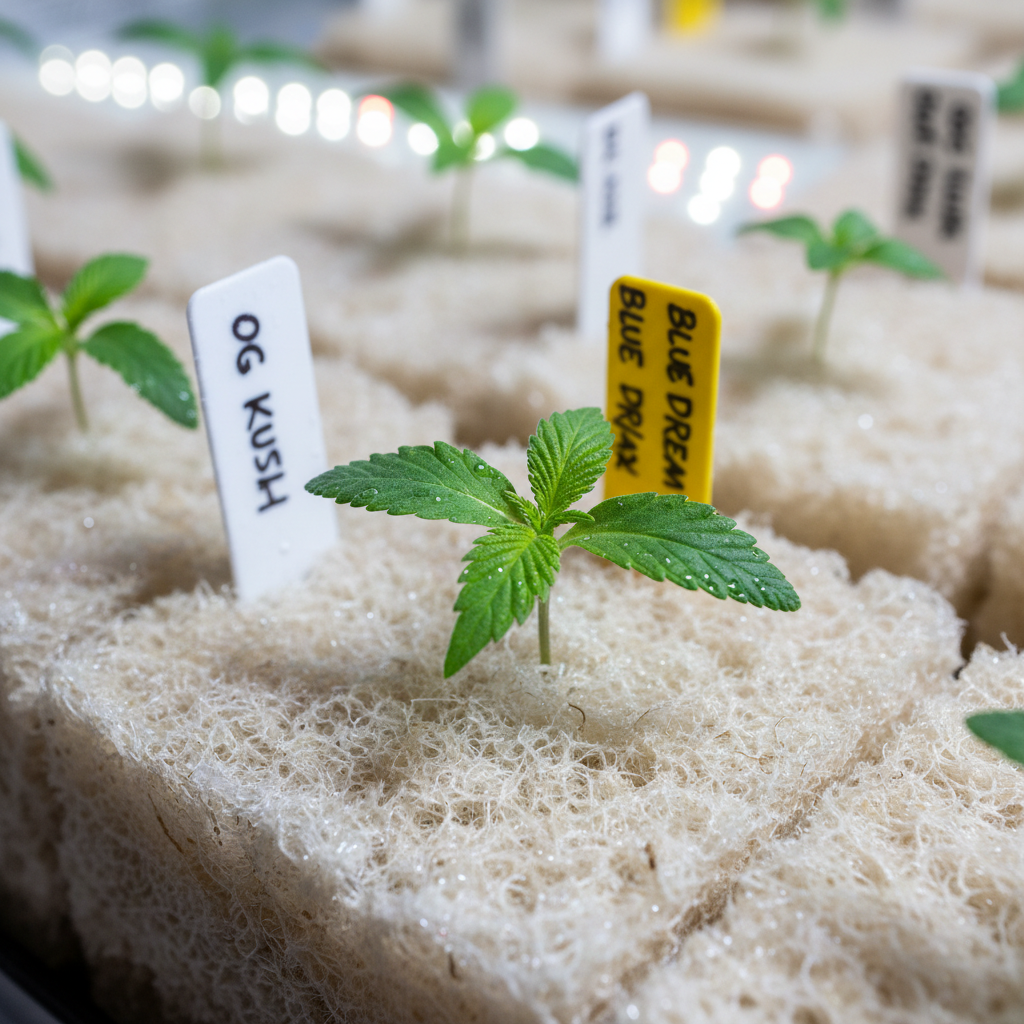
Germination & Early Phenotyping
First observations logged within 72 hours of tap root emergence.
Germination occurs in sterile rockwool at 26°C, 70% RH under 18/6 photoperiod. Each seedling receives a unique alphanumeric ID stamped on its flat.
Cotyledon morphology, hypocotyl length, and internode spacing are measured at day 5, 10, and 18. Early phenotypes that deviate from parent characteristics are flagged for separate tracking.
Seedling health scored on a 1–5 scale (vigor, color, structure). Only scores ≥4 advance to vegetative screening.
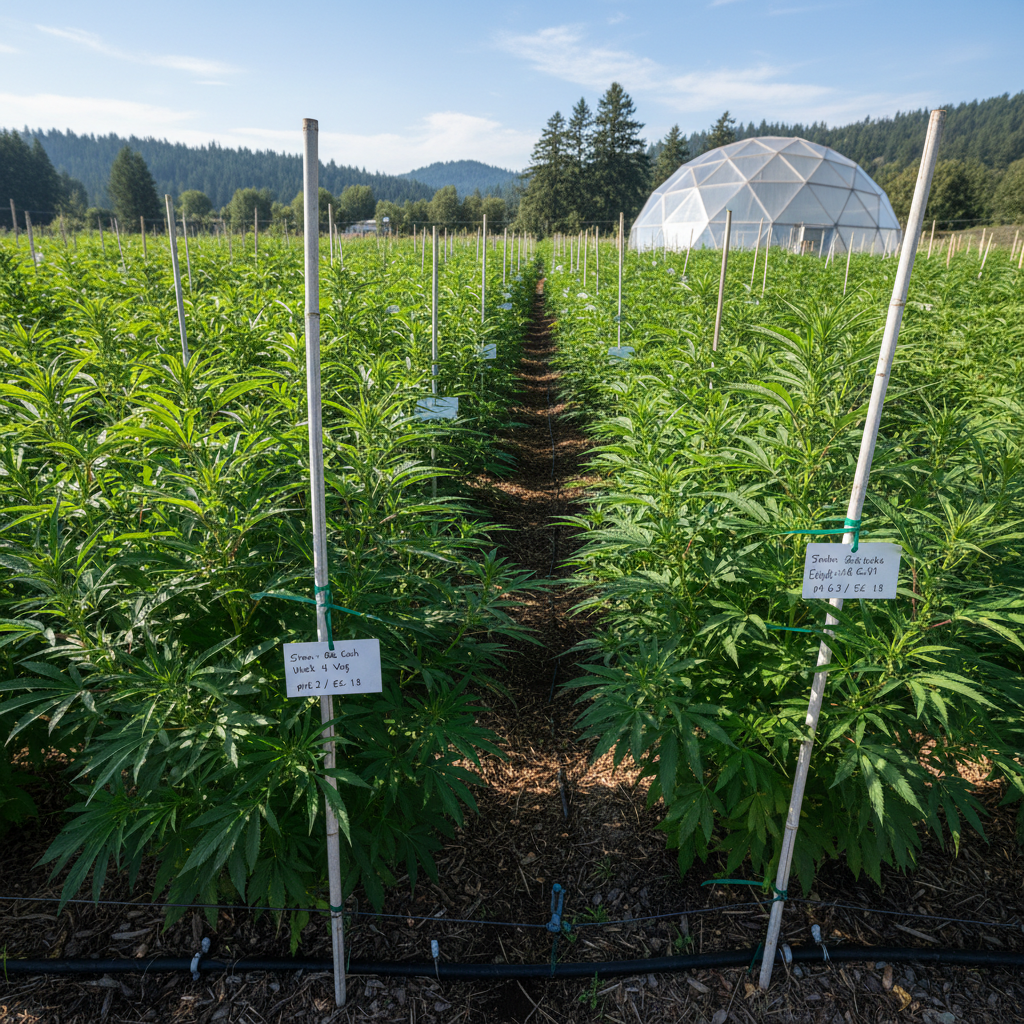
Vegetative Phenotype Screening
The field narrows here. Most phenotypes are retired in this phase.
Plants are grown to 45 days vegetative age under standardized conditions: 600W CMH, 24°C, 55% RH, REMO nutrients at EC 1.8.
Morphological data collected: internodal distance (cm), leaf blade width/length ratio, stem diameter at day 30, branching angle.
Tissue sampling at day 40 for early terpene screening via GC-MS. This is the first chemical fingerprint. Plants with terpene profiles diverging more than 25% from target are retired.
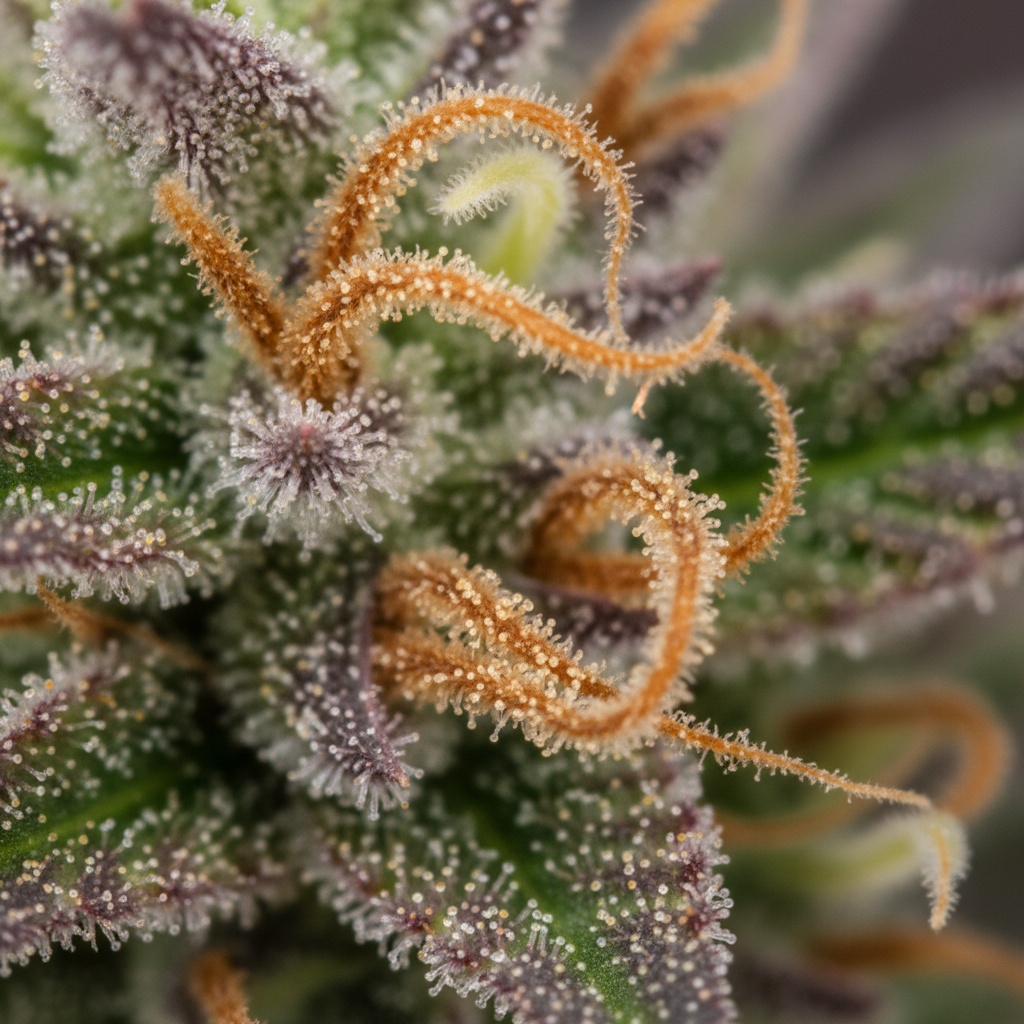
Controlled Pollination
Pollen collection and application is conducted in isolated chambers.
Male plants are isolated in negative-pressure chambers 14 days prior to pollen collection. Pollen is harvested by gently shaking anthers over sterile glass collection dishes.
Pollen viability is tested using fluorescein diacetate staining. Minimum 60% viability required. Pollen lots are vacuum-sealed and stored at -20°C for up to 6 months.
Female receptors are pollinated at 21 days of flower by direct application with a fine artist's brush. Pollination window, pollen lot ID, and environmental conditions are logged to the minute.
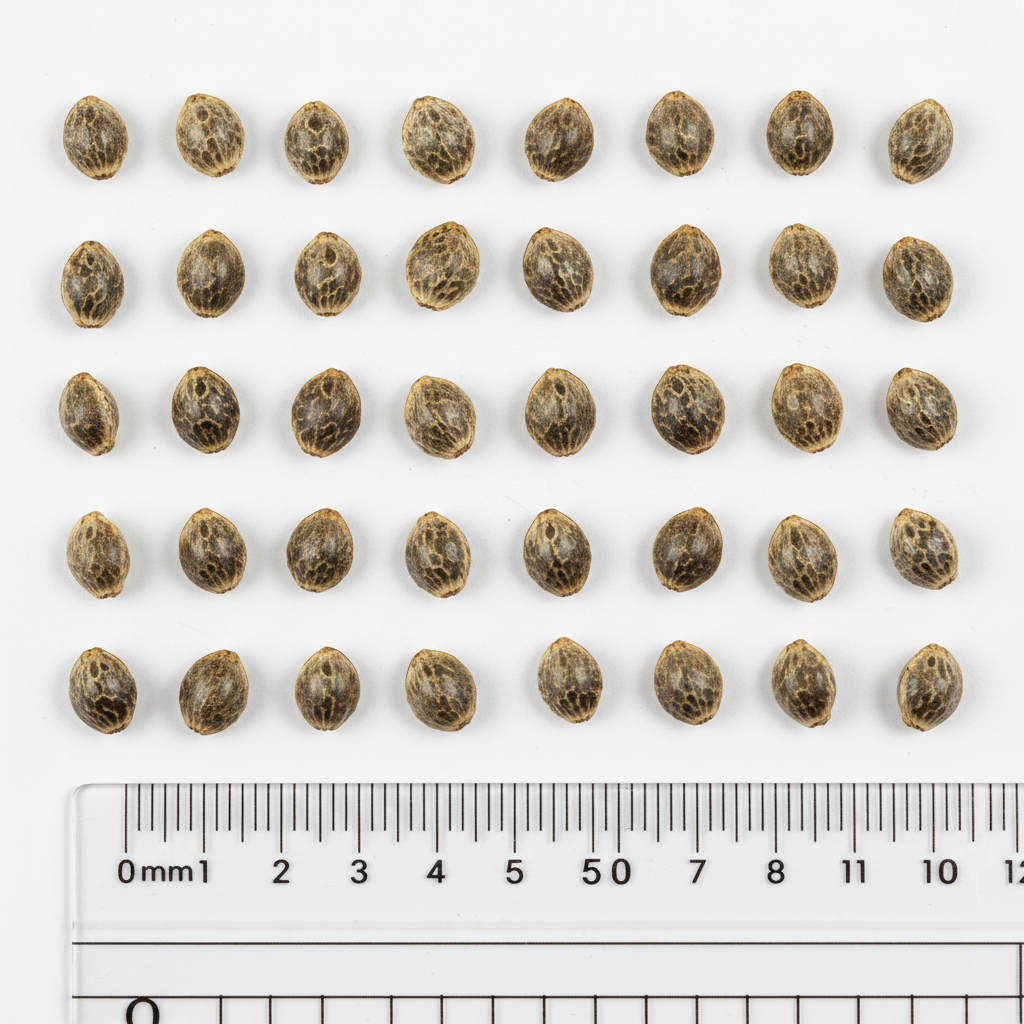
Seed Harvest & Stability Assessment
Seeds are the output. Their uniformity is the proof.
Seeds are harvested at 6–7 weeks post-pollination when calyxes have fully swelled and bracts show slight browning. Immature seeds are discarded.
Each seed lot is weighed, counted, and photographed. Morphological uniformity within the lot is scored: size variance, color consistency, and surface sheen.
F2 and later generations are grown out in cohorts of 20 to assess phenotypic stability. Coefficient of variation for key traits must be <15% for a line to be designated "stable."
Third-Party Testing & Release
Nothing ships without a CoA. No exceptions.
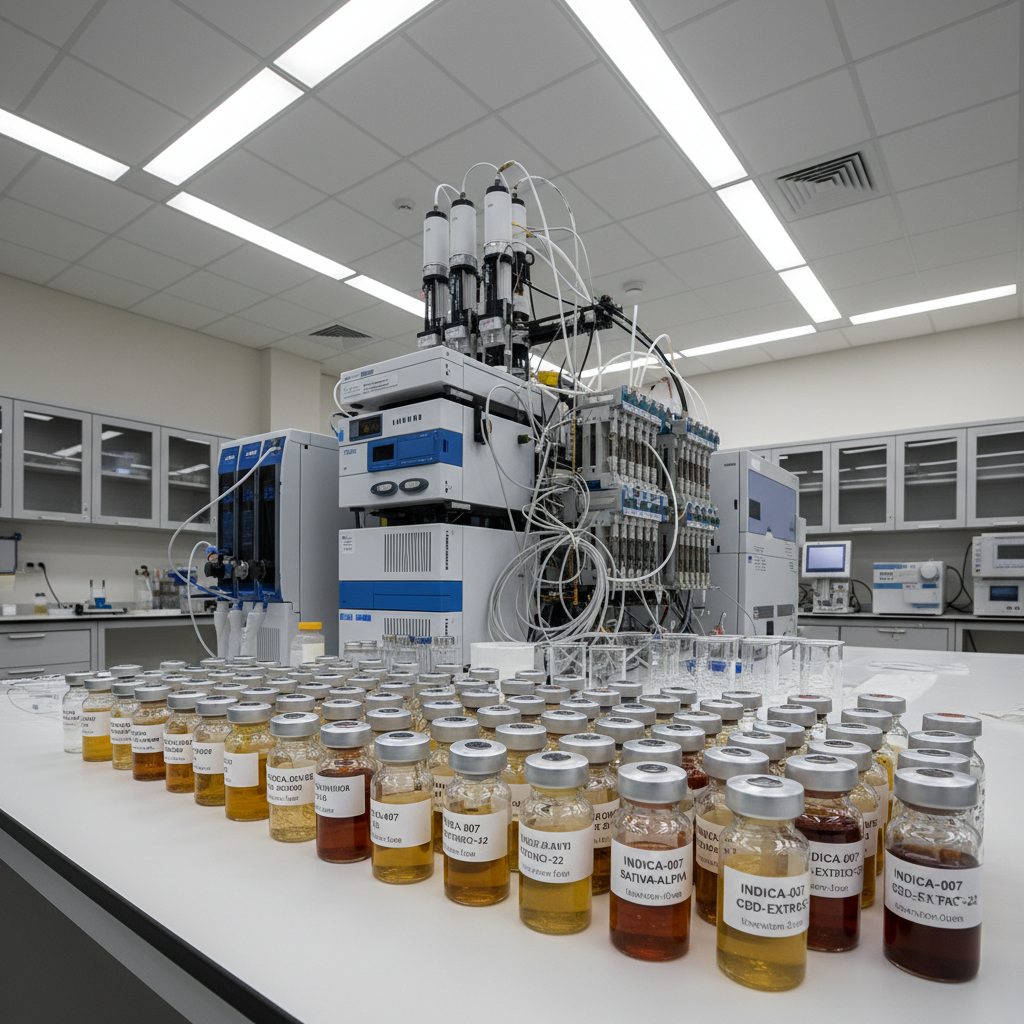
Every stable line is tested by two independent ISO/IEC 17025-accredited laboratories. Panels include: potency (HPLC), terpenes (GC-MS), residual solvents, heavy metals, microbials, and mycotoxins.
Results are compared across labs. Discrepancies >5% in potency or terpene content trigger a third-party adjudication.
Passing lots receive a Certificate of Analysis, a lot number, and are entered into the Cultivar Breeding Archive. All CoAs are publicly accessible via QR code on each seed packet.
Three stable lines.
Every terpene documented.
Each entry below represents a completed breeding program. The data shown is from the most recent third-party test batch.
Desert Star OG
Hindu Kush × Afghan #7
Dense, resinous phenotype with a compressed internode structure. Consistent across 3 grow-out cohorts. Exceptionally stable terpene expression — myrcene dominant with a diesel-earth base.
Get notified when Desert Star OG drops:
Solar Drift
Durban Poison × Thai Haze
Get notified when Solar Drift drops:
Verdant Cross
Lamb's Bread × Cannatonic IBL
Get notified when Verdant Cross drops:
The numbers don't
require interpretation.
Every batch tested by two independent ISO/IEC 17025-accredited laboratories. CoAs available via QR code on each seed packet. Full raw data included in the Breeding Archive.
Recent CoA Results
Sorted by test date| Batch ID | Cultivar | Lab | Date | THC | CBD | Total Terps | Top Terpene | Panels | Gen. |
|---|---|---|---|---|---|---|---|---|---|
| CVR-2025-DSO-047 | Desert Star OG | Cascade Analytical | 2025-11-14 | 26.3% | 0.18% | 2.84% | Myrcene (0.82%) | S1-G3 | |
| CVR-2025-DSO-048 | Desert Star OG | Confident Cannabis | 2025-12-01 | 25.8% | 0.21% | 2.79% | Myrcene (0.79%) | S1-G3 | |
| CVR-2025-SOL-031 | Solar Drift | Cascade Analytical | 2025-10-28 | 23.7% | 0.09% | 2.41% | Terpinolene (0.71%) | S1-G3 | |
| CVR-2025-VRD-062 | Verdant Cross | Confident Cannabis | 2025-11-30 | 11.9% | 10.8% | 2.12% | Caryophyllene (0.63%) | S1-G4 | |
| CVR-2025-VRD-063 | Verdant Cross | Cascade Analytical | 2025-12-18 | 12.2% | 11.3% | 2.18% | Caryophyllene (0.66%) | S1-G4 |
Cross-Batch Stability Metrics
"All terpene quantification performed via GC-MS with certified reference standards. Potency via HPLC-UV. Methods and instrument specs included in the Archive."
— Laboratory Methods Note, Cultivar Breeding Archive v2.4Download the complete
genetic record.
The Cultivar Breeding Archive is a 94-page PDF catalog containing full lineage charts, terpene profiles, cannabinoid data, cultivation notes, and CoA summaries for every stable line we have released.
What describes your operation?
This helps us send you the most relevant sections of the archive.